
The Invisible Elements of Great Interior Design
For many, Interior Design begins and ends with what’s right in front of them: the furnishings, the finishes, the color palette. But those elements only scratch the surface. The most successful interiors aren’t just seen, they’re felt.
At Jill Rae Designs, we believe the difference between a beautiful room and a truly exceptional one lies in the details you can’t always point to – the invisible elements. The quiet decisions that shape how a space lives, breathes, and supports your everyday life.
FLOW THAT FEELS EFFORTLESS
A well-designed space guides you without you realizing it. It’s not just about where things go, it’s about how you experience them.
You move through it naturally. There’s no hesitation, no awkward corners, no furniture that feels in the way. This is intentional. Thoughtful space planning ensures that every pathway, every transition, and every connection between rooms feels intuitive.
SCALE AND PROPORTION
Even the most stunning furniture can fall flat when not properly scaled to the space. The relationship between pieces, the height of a chair, the width of a table, the placement of lighting; creates balance. When scale and proportion are right, a room feels grounded and cohesive. When they’re not, something feels unsettled, even if you can’t quite explain why.
This is one of the most overlooked (and most powerful) tools in interior design.
LIGHTING THAT LAYERS THE MOOD
Lighting is often treated as an afterthought, but it’s one of the most transformative elements in any space. Done right, lighting doesn’t just illuminate a room, it shapes how it feels.
Great design uses layered lighting: ambient, task, and accent lighting. It shifts with the time of day and adapts to how the room is used. It softens, highlights, and creates depth.
TEXTURE YOU CAN FEEL (Even Before You Touch It)
Texture adds richness in a way color alone cannot. It’s subtle, but without it, a room can fall flat.
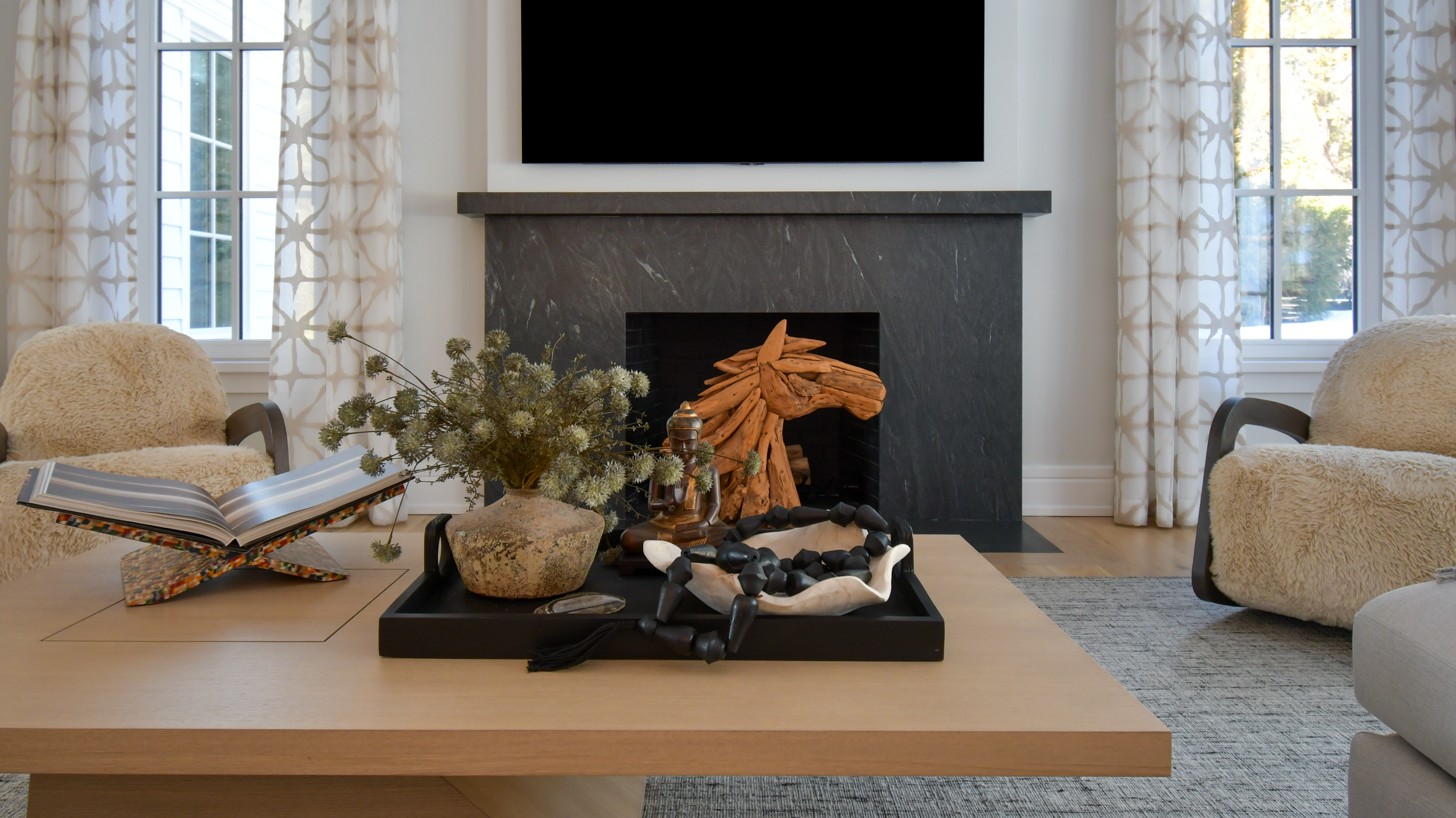
A woven rug, Bouclé furniture, reclaimed wood, stone surfaces, are just a few examples of layers that can create dimension and warmth. Even visually, texture invites you in. It makes a space feel lived-in, curated, and complete.
Cohesion Without Repetition
A home should feel connected, but never predictable. It’s the difference between a house that feels decorated and one that feels designed.
We often carry materials, tones, or silhouettes from one space to another, not in a way that’s obvious, but in a way that feels intentional. This creates a sense of continuity throughout the home while still allowing each room to have its own identity.
Function That Supports Real Life
Beautiful design should never come at the expense of how you live. The best interiors anticipate your needs before you even think of them.
Storage that’s exactly where you need it. Seating that invites conversation. Durable materials in high-traffic areas. These are the decisions that make a space not just visually appealing, but genuinely livable.
Emotional Resonance
This is the most intangible element—and arguably the most important.
A well-designed space reflects you. Your lifestyle, your routines, your sense of comfort. It tells your story in a way that feels natural, not forced.
That’s why no two Jill Rae Designs projects ever look the same. Because great design isn’t about a signature style, it’s about creating a space that feels undeniably yours.
Designing Beyond What You Can See
At its core, great interior design is about more than aesthetics. It’s about creating an environment that feels effortless, cohesive, and deeply personal. The invisible elements may not be the first thing you notice—but they’re what you remember.